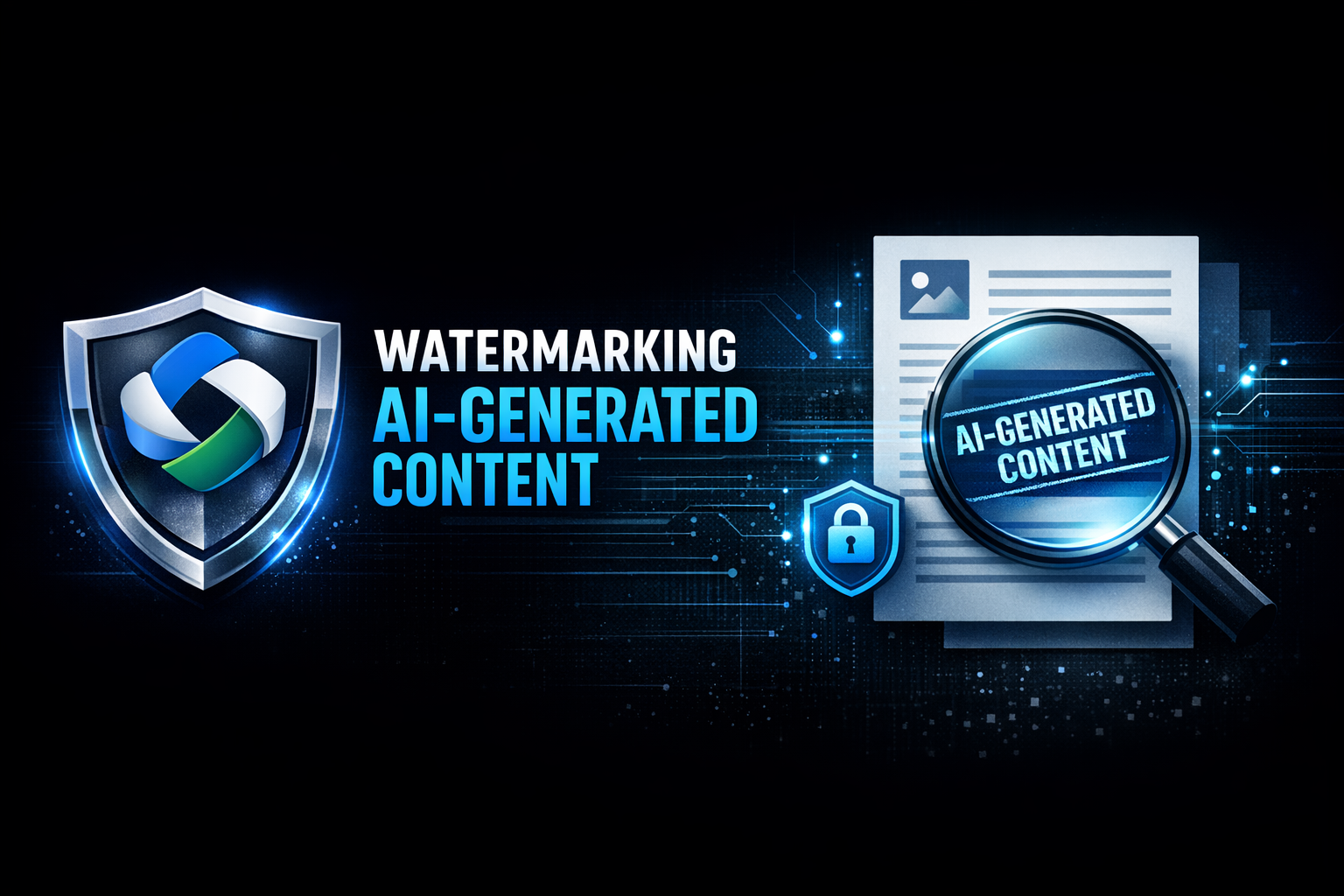

Microsoft is soon rolling out a new (optional) AI watermarking policy across Microsoft 365 – and while the headlines make it sound dramatic, the real story is more nuanced.
The change is part of a broader push toward transparency in AI-generated content, and it’s one that will matter increasingly as organisations scale their use of Copilot across documents, audio, and soon video.
Microsoft message centre info is here.
What’s Actually Changing
The new policy introduces visible watermarks for AI-generated or AI-altered audio today, with video watermarking coming next month. These watermarks are controlled centrally through the Cloud Policy service, not by end users.
A few important details:
- Admins have to enable the policy – it’s off by default.
- There is not ay customisation – at present Microsoft control the wording.
- Scope is limited to audio and video content initially.
- Images are separate – they follow their own watermarking rules at the user level.
- Metadata will always be embedded, even if visible watermarks are disabled.
The last point is actually the important one to note as even if your organisation chooses not to show a visible watermark, Microsoft will still tag the file with metadata about which model was used, which app generated it, and when.
This is already in place for images and is coming to audio and video
Why This Matters
As the world of AI becomes more front and centre in out work lives, where AI-generated content is showing up in more places, the need for transparency and trust becomes more important – especially with voice, audio, images and video
Watermarking and metadata on AI will being:
- Auditability – knowing what was human-created vs AI-assisted.
- Compliance – especially in regulated industries.
- Risk management – avoiding accidental misrepresentation.
- Content lifecycle clarity – understanding how something was produced.
For organisations adopting Microsoft Copilot, this is a governance tick. It gives business leaders and IT a consistent, policy-driven way to manage and label AI content without relying on user behaviour or good intentions.
What we still don’t know
The policy is sensible, but there are some notable caveats:
- Government cloud tenants are excluded for now, which raises questions about consistency and trust.
- No watermarking for text-based content – arguably the area where transparency is most needed.
- No customisation – organisations can’t align watermarks with internal policies or branding.
- Rollout is staggered – audio and video first then metadata expansion later.
And then there’s the human factor: if users don’t understand what’s being watermarked or why, you risk confusion or mistrust.
Preparing for the change
If you’re responsible for Microsoft M365 governance or administration in general it is worth doing the following:
- Review your AI usage policies – especially around content creation and distribution.
- Decide whether to enable visible watermarks for audio and video.
- Communicate clearly with users about what’s changing and why.
- Update your compliance documentation to reflect metadata tagging.
- Prepare for video watermarking arriving next month.
This is also a good opportunity to revisit your broader AI governance model – including data boundaries, prompt guidance, and content lifecycle management.
Final Thoughts.
This is a sensible, and obvious step in what I think is juts the start. Transparency builds trust, and trust is the currency of AI adoption.
This watermarking won’t solve every challenge, but it’s a foundation for responsible use and transparency.
Of course the bigger story here is that it seems Microsoft is moving toward a state where every piece of Microsoft AI-generated content will carries a provenance trail. I don’t think this is about control as such it’s about transparency and clarity which is what the tech industry wants and needs as AI becomes woven into everyday work and process.

Leave a Reply