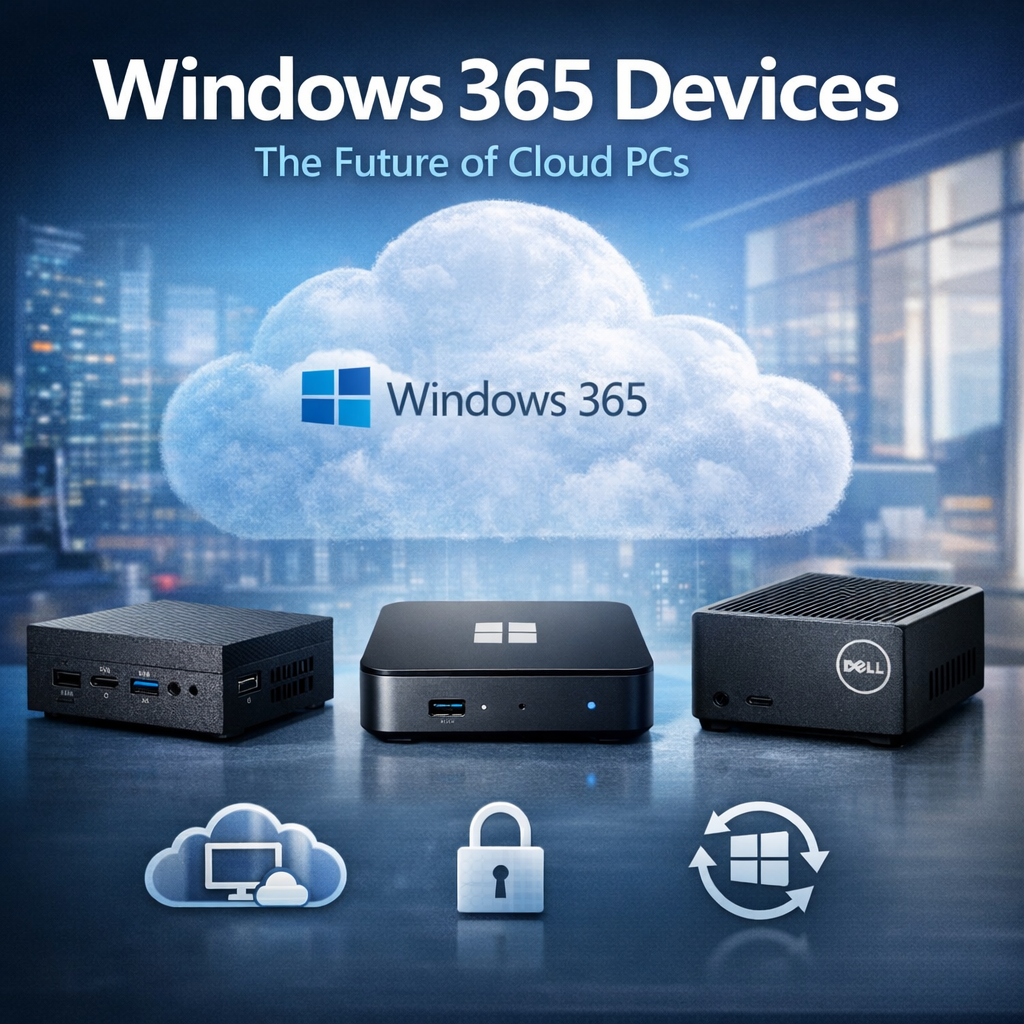

Microsoft’s Cloud PC vision took another confident step forward this week with the introduction of two new Windows 365‑powered mini PCs from ASUS and Dell – compact, secure, cloud‑first devices designed to boot straight into a Windows 365 Cloud PC. These join Microsoft’s own Windows 365 Link, the first dedicated Cloud PC device launched back in 2025, and together they signal a maturing category that’s starting to look genuinely ready for mainstream enterprise adoption.
If you’ve followed my writing on robquickenden.blog, you’ll know I’ve long believed that Cloud PCs aren’t just another endpoint option – they’re a shift in how organisations cthink about security, manageability, and flexibility.
This week’s announcements reinforce that direction.
What’s New: ASUS NUC 16 for Windows 365 and Dell Pro Desktop
This week two new OEMs announced that they are joining the Windows 365 hardware family later this year, both purpose‑built to act as secure, low‑maintenance gateways into a Cloud PC with devices available globally.
ASUS NUC 16 for Windows 365
- Ultra‑compact 0.7L chassis
- Mounts behind a monitor for clean hot‑desking
- Supports up to three displays via HDMI and USB‑C
- Latest Intel processor with DDR5 memory, Wi‑Fi 6E, Bluetooth 5.3, and 2.5GbE LAN
- Designed for simple, secure, cloud‑only operation
ASUS is positioning this as the ideal modern workspace device – small, powerful enough for Cloud PC workloads, and easy for IT to deploy at scale.
Dell Pro Desktop for Windows 365
- Compact, fanless, durable design
- Intel N‑series processors
- Up to three displays
- Flexible mounting options
- Targeted at regulated industries like healthcare, finance, and public sector
Dell position this about reliability and quiet operation – a thin client that disappears into the background while delivering a consistent Windows experience from the cloud.
Both devices are expected to reach general availability in Q3 2026, with ASUS launching in the US and Europe and Dell rolling out to 58 countries.
How These Devices Fit Into Microsoft’s Cloud PC Strategy
Microsoft’s own Windows 365 Link device – launched back in April 2025 after being announced at Ignite in Chicargo in November 2024. Built by the same team that design Surface, this set the template for this new category of device designed exclusively to work with Windows 365 Cloud PCs:
- No local data
- No local apps
- No local admin
- Locked‑down Windows CPC OS
- Boots directly into Windows 365 in seconds
The new ASUS and Dell devices follow the same philosophy.
They’re not PCs in the traditional sense (and don’t called the Thin Clients either) – they’re managed, secure access points with hardware acceleration to a Cloud PC running in Azure. These bring amongst other benefits:
- Simplified IT management through Intune
- Reduced attack surface
- Predictable performance
- Consistent user experience across locations and hardware
- Instant replacement if a device is lost or damaged
This is the same model that has made VDI attractive for years, but with Microsoft’s cloud‑native polish and without the infrastructure overhead and complexity of running and configuring AVD, VMware or Cjtrix type virtual desktop farms.
What Exactly Is Windows 365?
Windows 365 is Microsoft’s Cloud PC service – a persistent, personal Windows 10 or 11 desktop streamed from the cloud to any device. Think of it as a full PC that lives in the Microsoft Cloud (Azure in fact) rather than on your device.
Key characteristics:
- A dedicated Cloud PC per user
- Supports pooling across multiple (shared) users such as front line and shift workers.
- Always‑on, always‑up‑to‑date
- Accessible from Windows, macOS, iPadOS, Android, Linux, or a browser
- Backed by Microsoft’s global cloud infrastructure
- Managed through Microsoft Intune
- Designed for security‑sensitive and distributed workforces
- Mtuiple resilience, recovery and backup options.
It’s the same Windows experience – just delivered differently.
Why This Matters for Organisations
These represent a different approach (or a different part of) an organisations device strategy and one that delivers operational simplicity, predictability and security.
For IT leaders and Ops Cloud PC provides
- Predictable lifecycle – devices have minimal moving parts, last longer and require less (no) hardware maintenance or patching.
- Reduced risk – no local data on the device means fewer attack and breach vectors
- Scalable deployments – perfect for frontline, hot‑desking, hybrid work and rapid deployment in hard to reach places.
- Consistent experience – users get the same Windows desktop everywhere
- Lower TCO – especially when paired with existing Cloud PC investments
The biggest benefit perhaps comes to users, they get a fast, familiar Windows desktop that follows them anywhere. Cloud PCs also support Copilot+PCs features with local NPU features powered by Azure.
The Bigger Picture
With Windows 365 Link already in market and now ASUS and Dell joining the party, Microsoft is building a genuine ecosystem around Cloud PCs and open the technology up to global regions.
This, combined with upcoming updates which include improved bluetooth pairing during setup and much anticipated custom branding for the login screen experience show that Microsoft is continuing to refine the experience.
As organisations look for ways to simplify endpoint management, reduce risk, and support hybrid work at scale, Cloud PC devices are becoming a compelling option.


Leave a Reply