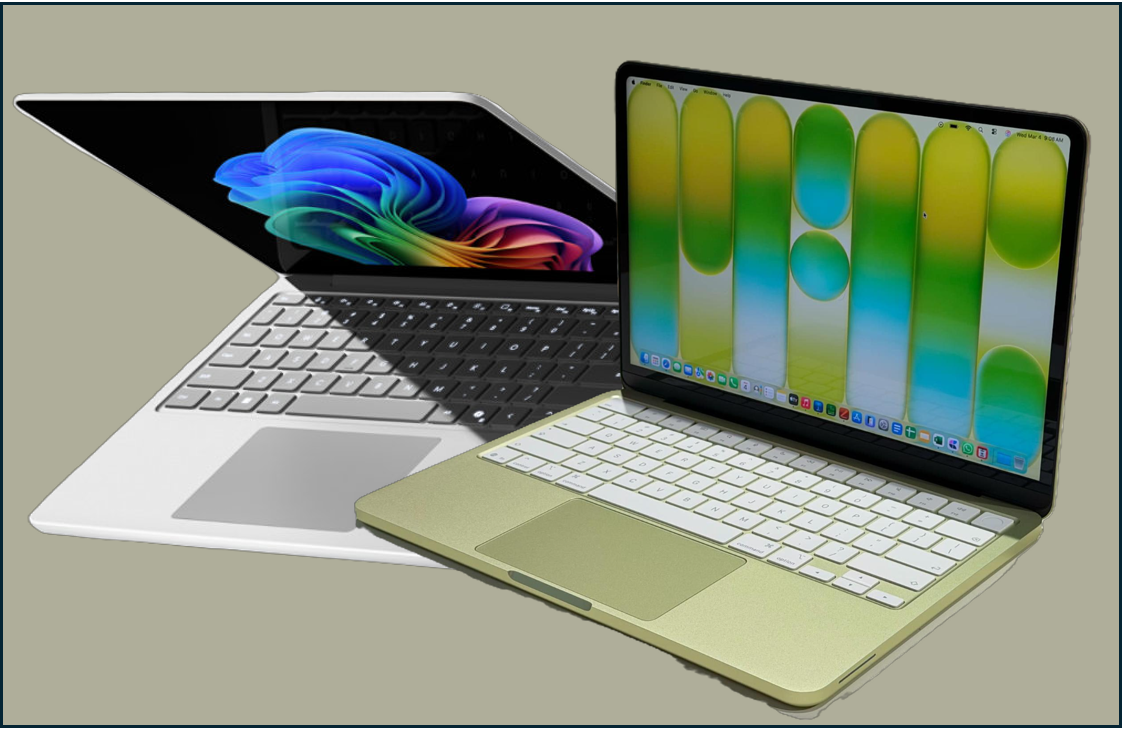

Apple has just reset the entry-level laptop conversation by announcing premium looking MacBook which starts at just $599 (£599 UK). Whilst not a comparison in terms of specs, it will make people look twice…
At a time where Windows device are coming under more pressure than ever, Apple have done what Surface tried to do a few years back with Surface Go range (which I was very fond of) because premium at value prices are great at reseting buyer expectations especially across consumer and education markets. Apple do well here and both are areas Surface marketing has sometimes struggled to target correctly.
What is Apple Neo?
Apple Neo is Apple’s first attempt in years to launch a truly affordable MacBook instead of relying on older models to fill the budget segment.
The Apple MacBook Neo is a budget-friendly laptop designed for everyday tasks and casual use. It features:
- 13-inch Liquid Retina display with 500 nits of brightness, providing vibrant colors and clarity. (not touch screen)
- Powered by the A18 Pro chip, which is similar to the iPhone 16 Pro, offering decent performance for basic tasks.
- 8GB of RAM and storage options of 256GB or 512GB (additional cost).
- Optional Touch ID but at extra $100/£100.
- A Multi-Touch trackpad and Magic Keyboard.
- Apple Intelligence features.

The MacBook Neo is priced starting at $599 / £599 UK making it an affordable option for students and casual users. It is available in colorful finishes and is designed to be lightweight and portable.
This is not a review of the device here but it does surprise me that in 2026 we still are releasing devices with no touch screen….
What MacBook Neo signals
There is no doubt the Microsoft are one of the best innovators out there when it comes to leading the way and sparking the market (well they certainly were). The Surface Team “invented” the 2-in-1, created the dual screen phone with Surface Duo and introduce premium low cost, devices such as Surface Go and Surface Laptop Pro both of which I have talked about in my blog (which still had enterprise security and touch screens).
Apple seems to wait just enough time and win market share, not because their products are better (IMO) but because they know their customers and have arguably the best marketing engine of any tech company. They are second to none when it comes to emotional selling and driving “appeal”.
With memory prices going up and supply chains at risk, it feels Apple have again timed the market right. Again, not a first, again nothing particularly special or unique but they will (because they do) market right and drive sales. They have done what Microsoft did with Surface Go. Launch a device that:
- Deliver an premium design at budget price. It’s still built from aluminium, has good audio and a vibrant display with a headline price will appear to stomps all over Windows OEMs including Surface.
- Competes and can win new customers in the entry-level battleground. Apple have a strong quality brand and loyal followers. Combine this with Apple’s retail reach, it can quickly pulls undecided buyers toward its ecosystem and away from Windows alternatives.
Microsoft need to re-learn from this.
I’ve written about the Surface Laptop Go 3 and Surface Go (the baby Pro) and my family members still use and love these devices.
Yes we have the Surface Pro 12″ (a quality device) but for many (consumer and enterprise) the Go range really hit the sweet spot between style, portability, manageability, and premium look and feel. Why (the starting price was really appealing)
As a comparison, Surface Pro 12″ with keyboard is £1024 and Surface Laptop 13″ starts at £899. These are a much super premium, higher spec, Copilot+, touch screen etc, but the entry point price is far less appealing.
For example, the Laptop Go 3’s aluminium build light weight, touch screen, Windows Hello, and good general performance make it an ideal fleet device for education, front line workers, home and school – exactly the segments Apple is now going after at a time that there are no real Windows based devices in this space.
From this (what Surface did and Apple have now done) there are three things that really matter now:
- Buyers want a budget friendly device that feels premium, not cheap
- IT teams and procurement in business want simple SKUs and long-term support without compromise.
- Price sensitivity is real – but so is willingness to pay for perceived quality.
- The market is there. Apple know this, they get the market and it’s likely to do well.
Why now is the time to bring back the Surface Go
I will be meeting the Surface Product team in a few weeks at Microsoft HQ in Redmond and I’ll be saying this to them then (but I’m sure they know).
The new Surface devices are gorgeous they really are. I love my Surface Pro 12″ but Microsoft have lost the lower peoce brand touch point they so need. Not just for Surface but for Windows longevity. Re-investing the Go range (it’s not too late) would:
- Defend Windows’ entry point. Apple’s Neo will tempt even loyal Windows users to look or at least pop into an Apple store and take a look.
- Microsoft needs a visible, well-marketed counter that protects the low end of the ecosystem and shows the best of Windows at a Low cost still with all the AI features.
- Education, consumer and frontline worker demand is strong. Schools and frontline (retail, not for profit and public sector) buy in volume when price, durability, and manageability align – I’ve seen customers purchase hundreds of Go-class devices for just that reason.
- More affordable Surface devices in the field mean they protect with wider eco system too – more Microsoft 365, Copilot, Defender, Windows and Intune seats.
- Other OEMs will follow as Microsoft set the standard.
I love you Surface but..
- Bring back the wow and drive the market like you always have and get your products to more price sensitive buyers.
- Win the consumer, front line and education users, they are the future buyers influences. The Laptop Go line was quietly excellent but under-promoted; relaunch it with a clear consumer, front line and education narrative.
- Get devices to people to touch and use. Apple’s retail presence lets people touch and feel their devices. Microsoft have no stores but need a way via retail giants to promote to consumer and get demo devices to commercial and education customers
- Simple SKUs, long warranty and visible pricing will make it appealing for schools, front line heavy businesses and MSPs to buy at scale with clear discounts and a small set of configurable options.
- Get the consumer excited by Surface.
People and Businesses will buy.
I’ve worked with organisations that purchased hundreds of Go-class devices because they hit the right balance of price, weight, and manageability.
Windows is still the OS of choice for business but with Apple hitting more price sweet spots the future business buyers may not. Consumer count and edu count.
Keeping surface cool and revelvant will help these loyal (or one loyal) Surface buyers buying. Surface devices are premium, great to use (the best experience) easy to support, quick to provision, sustainably built, and deliver predictable TCO with proven data and references which are exactly the outcomes IT leaders care about.
Reintroducing a focused revamped Go type line-up would IMO let Microsoft convert that operational value into renewed market momentum.
My final thoughts.
Apple’s MacBook Neo is a market nudge and should spark the Windows eco system.
It shows that affordable can also be desirable. Microsoft already has the platform, the enterprise trust, and the channel to respond — what it needs is a focused product strategy and a louder marketing play for the Go family. Bring back the Surface Laptop Go and Surface Go as clearly positioned, well-supported, and aggressively marketed devices, and Microsoft will not only defend Windows’ entry point but also feed its services ecosystem.
If Microsoft don’t, I actually think Lenovo will. They have been coming hard at devices which mirror the same innovation that the Surface I knew from a long time ago had.
I’ll be talking opening to the Microsoft team about this in a few weeks.
What would you want me to tell them?

Leave a Reply