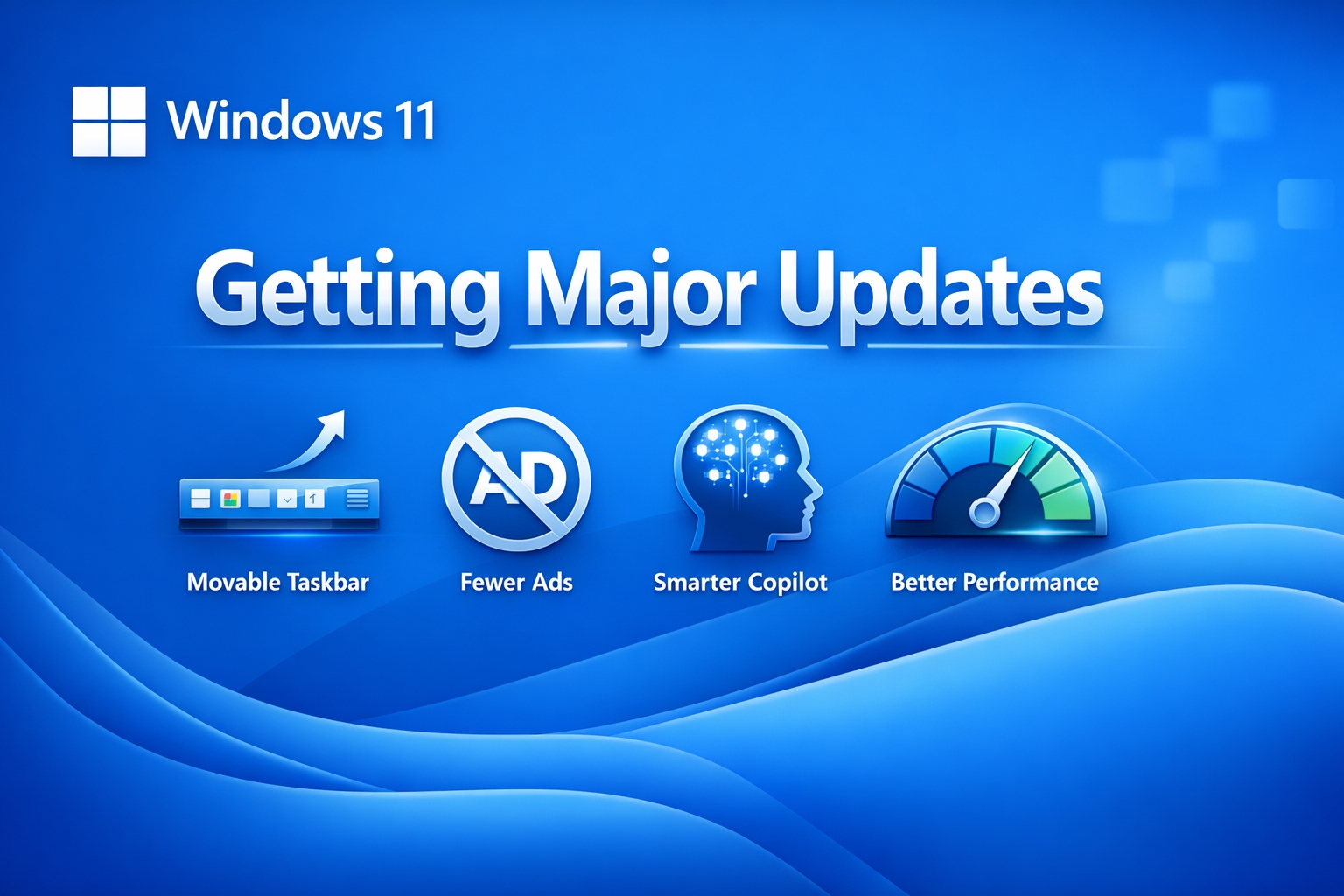

Microsoft has started sharing what’s coming next for Windows 11, and for the first time in a while, the focus feels firmly back on the fundamentals. Less clutter.
- More control.
- Better performance.
- Taskbar is finally becoming movable again.
Many of these updates have been on the top Windows feedback hub for years…

"We are focusing on making Windows 11 more responsive and consistent, so performance feels smooth and reliable. Over the course of the year, we’re improving system performance, app responsiveness, File Explorer and the Windows Subsystem for Linux, helping Windows stay fast as you move between apps and workloads. |Pavan Davuluri, EVP of Windows & Devices
Here’s a summary of what is coming…
Windows Taskbar will be movable
Yay! One the biggest asks from user feedback is happening after Microsoft told us just a couple of months ago that it was “too hard to do”…
Yes, The taskbar is becoming movable including vertical layouts and top‑mounted configurations.

Personally this is huge as a tablet (Surface user) or anyone that uses large or a ultrawide screens, has accessibility setups, or simply prefers this approach this is big.
This change is about giving us users preference and choice including:
- Personal preference
- Accessibility
- Respecting how people actually work
Windows 11’s fixed taskbar has been one of the most consistent pain points since launch. This is Microsoft listening.
A Clear Reduction in Ads and “Recommendations”
Windows 11 has slowly accumulated more “suggested” content than most users want. The next update cycle aims to dial that back.
We should see:
- Fewer ads in the Start menu
- Less promotional content in Settings
- A cleaner, calmer experience
Windows should feel like your device, not a marketing channel. This is a welcome course correction.
Less Copilot but Still Copilot.
Copilot: Still There, But Less In Your Face
Copilot isn’t disappearing – but it is becoming more subtle.
Microsoft is:
- Reducing its visual footprint
- Making it more optional
- Integrating it more naturally into workflows
This is the right approach. Copilot is powerful, but it needs to feel like a tool you choose, not something that interrupts you.
A bunch of Performance Improvements
This is the part that will land well with both consumers and IT teams and is made possible by rewriting much of the start menu controls
Microsoft is promising:
- Faster boot times
- Quicker app launches
- Reduced background resource usage
- More efficient updates
Windows 11 has felt heavier than it should on some devices. These improvements could make a meaningful difference, especially across large fleets or older hardware.
Why This Matters
Windows 11 has evolved quickly, but not always in ways that aligned with what users actually wanted. This next wave feels different. It’s grounded. It’s practical. It’s focused on the basics.
This means:
- A more predictable user experience
- Fewer distractions
- Better performance on existing hardware
- Less friction for hybrid and frontline workers
For everyday users, it means Windows is becoming more personal again… Like it used to be!
My Take
This is the most encouraging Windows 11 roadmap we have seen in a while. Party because it not about adding more Copilot features that users have asked for, but because it’s promising to deliver changes that are focused on improving day‑to‑day use, personalisation and performance.
None of these are revolutionary, they just show that Microsoft are listening to user feedback which Microsoft need to do right now.
Link to Microsoft Blog:
https://blogs.windows.com/windows-insider/2026/03/20/our-commitment-to-windows-quality/


Leave a Reply