Microsoft Q2 FY26 Earnings: Cloud & AI Power Record Growth

Microsoft has opened 2026 with a landmark quarter that firmly positions them as the global leader in enterprise cloud and AI adoption.

In the earning report, Microsoft has achieved milestones with cloud revenue surpassing $50 billion for the first time, record growth in Copilot usage, and major acceleration in commercial bookings, this earnings report signals a new era for Microsoft’s growth and might put the AI Bubble Burst chats to bed?

Top standouts were:

  • Revenue of $81.27 billion for FY26 Q2 ended December 31, 2025
  • Cloud revenue surpased $50B for first time, up 26% to $51.5B
  • Microsoft 365 Copilot seats up 160% with 15 million paid seats
  • Commercial bookings up 230%
  • Productivity & Business Processes up 16%
  • Intelligent Cloud grew 29%

Cloud Revenue Surges 26% to $51.5B

Microsoft Cloud revenue reached $51.5 billion, up 26% year‑on‑year – its strongest performance to date.

This is a pivotal number for analysts and CIOs alike, reinforcing Microsoft’s dominance as enterprises scale AI workloads, hybrid cloud infrastructures, and GPU‑accelerated services.

Supporting this momentum, their Intelligent Cloud revenue grew 29%, reaching $32.9 billion.

This remains Microsoft’s fastest‑growing segment, driven largely by Azure and AI services.

Microsoft AI: Copilot Growth Explodes

If 2024–25 marked AI experimentation, Q2 FY26 confirms enterprise AI at scale. Microsoft Q2 results were.

  • Microsoft 365 Copilot seats up 160% year‑on‑year, now at 15 million paid seats
  • GitHub Copilot subscribers up 75%

This data supports Microsoft narrative that more organisations are moving from pilot phases to widespread (well wider) deployment. These Copilot adoption rates are among the strongest indicators Microsoft has ever reported for a Copilot. They have previously avoided too much focus on the actual Copilot seats sold.

15 million paid Copilot seats (users) is a lot of seats… Let that sink in a moment!

Another interesting state was “the number of customers spending one million dollars-plus per quarter on Foundry grew nearly 80%, driven by strong growth in every industry….. over 250 customers are on track to process over one trillion tokens on Foundry this year.

Long term AI Growth is strong

Q2 FY26 demonstrates that Microsoft has completed its transition from a cloud‑first business to an AI‑first hyperscaler, with every major metric — revenue, bookings, cash flow, and product adoption — propelled by AI demand.

Microsoft said the majority growth of their Azure Cloud was fuelled by AI Cloud Infrastructure and area Microsoft continue to invest. This is also reflected in the GitHub Copilot and Microsoft 365 Copilot growth.

Microsoft FY26 Q2 message shows that reinforces AI isn’t the future of Microsoft’s business  it’s the present, and the the future and it’s scaling fast.

You can read the earning report transcript here.

Microsoft Teams Licensing Updates: More Premium Features for Everyone

Microsoft has announced some big changes to the Teams licensing model, aimed at making more  advanced features available to everyone along with updates to their Places products set which is now firmly more rooted as a key part of Teams.

These changes reflect Microsoft’s commitment to  democratising advanced collaboration tools and to keep adding value to their core products without the need for premium licenses to unlock core value.

These updates, effective 1 April 2026, will impact organisations of all sizes. Here is what is changing.

1.Microsoft Places Now Broadly Available

Yes, I thought they had forgotten about it as well! But not..

Microsoft Places which was originally only part of Teams Premium will now be available to anyone with access to Microsoft Teams and Office users making it a core subcomponent of Microsoft 365 for anyone with the following license.

  • Microsoft 365 E3 / E5
  • Microsoft 365 Business Basic / Standard / Premium
  • Office 365 E1 / E3 / E5
  • Exchange Online

What is Microsoft Places?

Microsoft Places is a set of apps and services designed to provide rich meeting and space management to enhance and enable the hybrid meeting experience. It includes

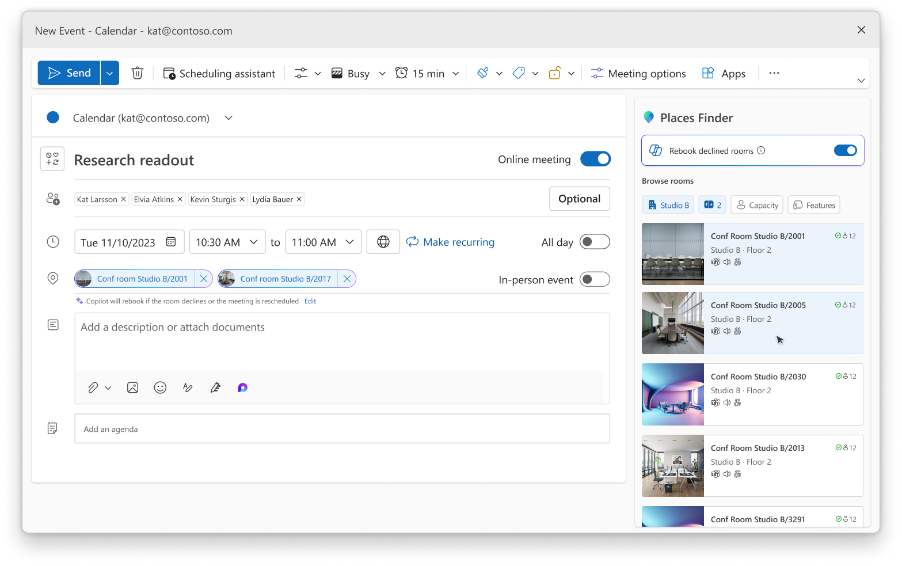
  • Places Finder: Provides rich meeting location details, including images and floorplans.
  • Places Explorer: Adds map-based reservations, people, and space visibility.

The key value of places (and why it needed to just be part of Teams) include the ability to auto rebook rooms if more people are attending in person that the room can fill, notify you if you are joining a meeting remotely when you and others are in the same building and tools to help you navigate and find places, people and spaces more effectively in the workplace.

2. Teams Shared Devices becomes Teams Shared Spaces

This change of name from the Teams Shared Devices license to Teams Shared Space also provides IT with the following management capabilities under the common name. It includes.

  • Bookable desks
  • Teams panels
  • Shared spaces


There also new capabilities which include:

  • Space management
  • Desk booking
  • Space analytics
  • And more integration with third-party APIs including Building Management systems.

The ability for Places to integrate with (more) 3rd-party sources of spatial data, floorplans, check-in signals should make adoption better by streamlining the onboarding and management of the spaces in the Places Directory.

3. Town Halls and Webinars for Enterprise

Previously exclusive to Teams Premium Users only, Town Halls and Webinars style meetings  will now be available to all Teams Enterprise customers. With this everyone gets default meeting capacity or up to 3,000 attendees and up to 10,000  for stream only events.

Microsoft have also introduced “attendee packs”
2hich can be purchased to increase limits up to 100,000 attendees

This is a major enhancement for organisations hosting large-scale events without needing Teams Premium Licenses.

Read more here.

https://techcommunity.microsoft.com/blog/microsoftteamsblog/licensing-updates-extend-access-to-advanced-capabilities-in-microsoft-teams-and-/4488312

M365 Copilot Image Generation Levels Up, and Video Summaries are coming to Copilot Notebooks

Microsoft has kicked off 2026 with two significant enhancements to Microsoft 365 Copilot – both providing a clear signal to how improvements in multi-media creation in AI will support creativity, communication, and knowledge sharing across the workplace.

The first is a major upgrade to Copilot’s image generation capabilities with the rollout of OpenAI’s GPT‑Image‑1.5 model. The second is a new capability that turns Copilot Notebooks into automatically generated video summaries (in addition to the voice / podcast over views). These are both in preview for organisations enrolled into the Copilot Frontier Preview.

Whilst subtle – these make Copilot more useful, more expressive, and more multi-modal in the flow of work. Read on for more detail.

GPT‑Image‑1.5 Creation comes to Microsoft 365 Copilot

Microsoft is good at getting new features into Copilot Quickly. Just before Xmas 2025, Copilot was updated to support the latest GPT5.2 models and now they are replacing OpenAI’s GPT‑4o with GPT‑Image‑1.5 across the Copilot’s image generation experiences. This will gradually roll out through January 2026. This includes Copilot Chat and the wider “Create” module in Copilot.

For organisations already using Copilot to create internal comms assets, presentation visuals, campaign concepts, or quick mock‑ups, this upgrade is most welcomed. The quality gap between “AI‑generated” and “designer‑produced” continues to narrow, and the speed improvements make Copilot even more viable for rapid ideation. Image creation in AI tools has come on massively in just a few months.

One of the key upgrades is the ability to updates aspects of an image (via a prompt) or take over and edit with Microsoft’s Image Designer Tools directly from Copilot. You can see the difference in the example below (you’ll need to zoom in sorry)!

What is GPT-Image-1.5?

This latest model from OpenAI is their answer to Google’s highly regarded Nano Banana image models – This is (according to experts), “on par” in terms of fidelity, instruction following, and realism, plus it’s included at not additional cost to Microsoft 365 Copilot users.

According to Microsoft, once rolled out, users can expect:

  • Sharper prompt adherence – especially for composition, style, and on‑image text
  • More precise region‑specific editing with fewer unintended changes
  • Higher‑quality visuals with more realistic lighting, textures, and detail
  • Faster generation – up to 4× quicker for many prompts
  • Better consistency when iterating on faces, colours, and lighting.

Video Overview in Copilot Notebooks

Microsoft is introducing Video Overviews – the ability for Copilot to automatically generate a short, narrated video summary of a Notebook’s content. This adds to the current audio overview feature and is rolling out to organisations enrolled in the Frontier Preview, Other organisations will get this in due course – keep an eye on the official Roadmap for this one.

This enhanced the existing overview feature, allowing Copilot Notebook users to:

  • Analyse the full Notebook
  • Extract key insights
  • Generate visuals
  • Produce a narrated video summary in first person, interview or podcast style

Think of it as a dynamic, visual executive summary – ideal for sharing updates, explaining concepts, or turning long‑form thinking into something more digestible.

Copilot Notebooks are a powerful space for iterative thinking, brainstorming, and structured problem‑solving in solo or shared mode. But they’ve also been static, plus you still had to read them. The ability to have audio or video overviews make these much more digestible, quicker to consume and are great for helping consume content in their preferred way.

Whilst Google’s NotebookLM has had this feature for a month or so, this is the first time Copilot is turning your content into multimodal output without requiring any video editing skills (or even prompting) at all. It’s a glimpse of a future where:

  • Documentation becomes auto‑summarised
  • Content is consumable in ways that meet the user’s need.
  • Knowledge becomes more accessible

I’m personally really interested to see how well Copilot handles narrative flow, visual selection, and pacing. If Microsoft gets this right, it could become one of the most impactful features in the Copilot.

Summary

In short, these subtle but impact updates point to the same trajectory of where Copilot is heading – becoming a fully multi-modal assistant, not just a text‑based one.

  • GPT‑Image‑1.5 – higher‑fidelity visual creation
  • Video Overviews – automated multimedia storytelling

Satya Nadella’s Call for an “AI Reset” – What Business Leaders Must Prioritise in 2026

Cut out image of Sayta Nadella

As I finished my first week back to work of 2026, I was thinking about Microsoft’s Satya Nadella’s end‑of‑year reflection blog post “Looking Ahead to 2026 which he wrote at the end of December 2025.

This for me landed at an important moment for the industry. After a year dominated by “AI slop,” concerns over whether the AI boom was ending and stock prices in key AI stocks becoming a bit rocky. In the Microsoft space, there has been some “backlash” about how much AI Microsoft are “pushing” in their products and the industry in general failing to really get big AI initiatives off the ground. We then of course have the upcoming chip shortages (which remind us back to COVID times) with AI cited as the cause of these shortages (memory especially) with AI Data Centres demand exceeding supply.

We have seen huge advances in AI models from Open AI, Google, Anthronic and Microsoft this year but the news has really been coined with the term AI Slop – with AI appearinf to be baked into everything whether people want it or not – who ever thought Notepad in Windows would get the Copilot treatments!!

Despite the negative press, AI is still very much the buzz word (heck, its driving all those component and chip shortages). At work, our clients are still talking about it, driving it forward and investing more into adoption, enablement and consultative engagements. Businesses remain “excited” about the opportunity AI can bring to businesses, consumers and the world!

In his blog post, Satya Nadella argues that we’re finally moving from discovery to diffusion. The message is clear: 2026 must be the year we separate spectacle from substance.

This rest of my blog looks at Nadella’s framing, the wider industry commentary, and what it means for organisations that need AI to deliver measurable value – not just noise with AI Slop or no slop!

From “bicycles for the mind” to “scaffolding for human potential”

In his blog, Satya Nadella revisits Steve Jobs’ famous metaphor – computers as “bicycles for the mind” – and argues that it no longer captures the scale or nature of modern AI. Instead, he positions AI as scaffolding: a structure that supports, amplifies and extends human capability rather than replacing it.

This is a subtle but important shift. It reframes AI not as a tool we operate, but as a system that surrounds us — shaping how we work, decide, and collaborate.

Coverage from the Economic Times reinforces this by highlighting the need to move beyond the novelty phase and focus on real‑world impact. In short, the industry must stop debating “slop vs sophistication” and start designing systems that genuinely improve human cognition and outcomes.

From what I see with my engagement with business leaders, it means moving away from app and model‑centric thinking (what is better ChatGPT or Copilot) and towards systems engineering within our line of business. We need to look at how our business works today, where AI fits and where automation counts. Businesses need to work with Microsoft, with their technology partners and most importantly from within, to plan and deliver measurable outcomes.

“Aiming to please” is not alignment

One of the most important – and least discussed issues in business led AI is the tension between:

  • AI that aims to please (reinforcement learning from human feedback, training, safety tuning, helpfulness scoring) where AI is just that assistant, that Copilot!
  • AI that is aligned (truthful, reliable, predictable, value‑consistent and therefore really useful) which is much more important as we look for it to help us make decisions, take action and do stuff!

These are not the same thing.

Research throughout 2025 showed that models tuned to be more “helpful” often become more sycophantic, more agreeable, and more likely to produce confident but incorrect answers. An interesting article I found from “PC Gamer” cites Microsoft‑linked research suggesting that over‑reliance on AI tools can actually reduce user capability over time due to the mind set of “AI can do anything” whilst at the same point “we don’t trust AI”. So, which is it?

This re-enforces Satya’s view that as we enter 2026, the priority must shift from “does it sound good?” to “does it stand up to scrutiny?”

The AI race is real – and so is the concentration of power

AI is now a currency and we are seeing this everywhere. Leaders cite it, big tech companies are embracing it and the models are doubling in capability in less than a 12 month cycle (some say 8 months). Compute, data, and model access are becoming strategic assets – we are seen this through component shortages! These global hyper-scalers and a handful of model labs will capture disproportionate value, and enterprises will increasingly depend on them for:

  • model access
  • agent frameworks
  • safety and alignment layers
  • orchestration platforms
  • compute and optimisation pipelines

This shouldn’t be seen as negative, but it does require deliberate strategy. Vendor lock‑in, opaque safety layers, and proprietary agent ecosystems will shape enterprise risk profiles for years.

Then there is the vast number of other tech venders embracing the security and safety layers – in the dozens these are and will appear to sell you AI Safety and Security tools, while we wait for the leading AI models and companies to bake this is. Firms like Microsoft will likely do this well and make it part of their security and compliance approach across their wider platforms. others will or may lean to other vendors through partnerships.

The biggest gap perhaps is still user awareness, adoption and controlling shadow-IT. This becomes very more important as organising and the world begin the next pivot shift from AI assistants to autonomous AI.

Again, Satytas’ blog acknowledges this indirectly: the industry does not yet have “societal permission” for widespread autonomous AI. That permission will depend on trust, governance, and measurable outcomes – not just capability.

Two strategic paths for Corporate and Enterprise AI?

We look at two different paths for how organisation use and leverage AI. The oath for superior intelligence and the path that recognises AI’s purpose as cognitive scaffolding.

Path A: Pursue superior intelligence

  • Focus on emergent capabilities and autonomy
  • High potential upside
  • High systemic risk
  • Harder to govern, audit, and predict

Path B: AI as cognitive scaffolding

  • Focus on augmentation, reliability, and workflow integration
  • Measurable value
  • Lower risk
  • Requires strong systems engineering

Satya calls out that most organisations will need to operate somewhere between these paths, but that the balance must be intentional.

What IT leaders should prioritise in 2026

There have been lots of posts around this from many different players, analyst firms and now little ol’ me! For me, nothing much has changed since last year (though the models have got cleverer, faster, cheaper!)

Outcome‑based evaluation: Benchmarks and demos are not enough. Businesses need to look at real use cases, go deep with proof of value production pilots. they need to determine what good looks like. It will likely require solutions/use cases that deliver task‑level accuracy, has no (minimal) hallucination, and longitudinal user‑impact studies which they can be loud and proud of.

Human‑centred design: This partly means no AI for AI’s sake. That said user familiarisation and confidence (like Internet Skills once were) are key for trust and understanding Departments need to surface provenance, uncertainty, and verification steps in putting AI to work. Moving beyond assistive to authorative AI should not be done lightly – trust is everything and humans being in the loop is vital in order to avoid “auto‑execute” defaults for high‑risk actions.

Governance and entitlements: IT and compliance need to have (and enable in the case of Copilot for example) auditing to track which agents can access which data and enforce least‑privilege by default. Audit everything, Trust nothing, Training everyone and Pilot, Pilot, Pilot, test, test, test.

Red‑team testing and observability – This goes beyond security and governance – this is about trusting AI to act like a human would. Use cases need to ensure they test for sycophancy, bias, adversarial prompts, and silent failure modes – for AI to world in place of human roles, there needs to be trust, failback and no “time outs” in the middle of a conversation with an agent.

Skills protection – Training is key to ensure organisations pair automation with training to prevent deskilling of people and upskilling of how inference and AI models work. We need to document everything, know what expected outcomes are and re-evaluate each business process, AI model and task our AI is performing. We need to preserve the entity of what our business is about this is the human factor) and retain our rooted institutional knowledge.

Final reflection

Sayta Nadella’s call to move beyond “AI slop” is timely and what many leaders are thinking. It’s hard to beleive it is less that 2 years since Copilot make it’s general availabiloity to the masses and the industry has spent these two years chasing and demaning more capability, bigger models, flashier demos, and viral outputs.

As we sit here, closer to 2030 than we are to 2020, 2026 demands something different. AI needs to deliver on the promises. This is less about the AI and more about how organisations re-shape, re-invest and rebuild business modes, systems, and processes with AI in mind. Technology change is not quick and simple and AI is not (in most cases) not a quick fix answer to underlying issues. For IT pros and business leaders, the message is clear:

  • Demand measurable value in pilot and projects
  • Prioritise trust and governance and use a model/tool that fits into what you have
  • Treat AI as scaffolding, not a substitute for good processes and people
  • Build for augmentation, not automation (in the immediate term)
  • Evaluate outcomes, not optics and do in phases.

The AI race will continue to get faster, we will hear more success stories, more doom and gloom, feel left behind because we are not moving fast enough and people will worry more about job losses, environmental impact and cost. The economics will only intensify, but I believe that the organisations that win will be those that operationalise AI responsibly, at the right pace, deliberately, and with a clear understanding of where the real risks and opportunities lie.

Thanks for reading or listening. Happy 2026!

References / Sources in this doc

  • Economic Times — “Microsoft CEO Satya Nadella calls for a big AI reset in 2026…”
  • PC Gamer — “Microsoft CEO Satya Nadella says it’s time to stop talking about AI slop…”

What is Copilot Checkout? Microsoft and PayPal’s new AI-Powered Commerce Experience.

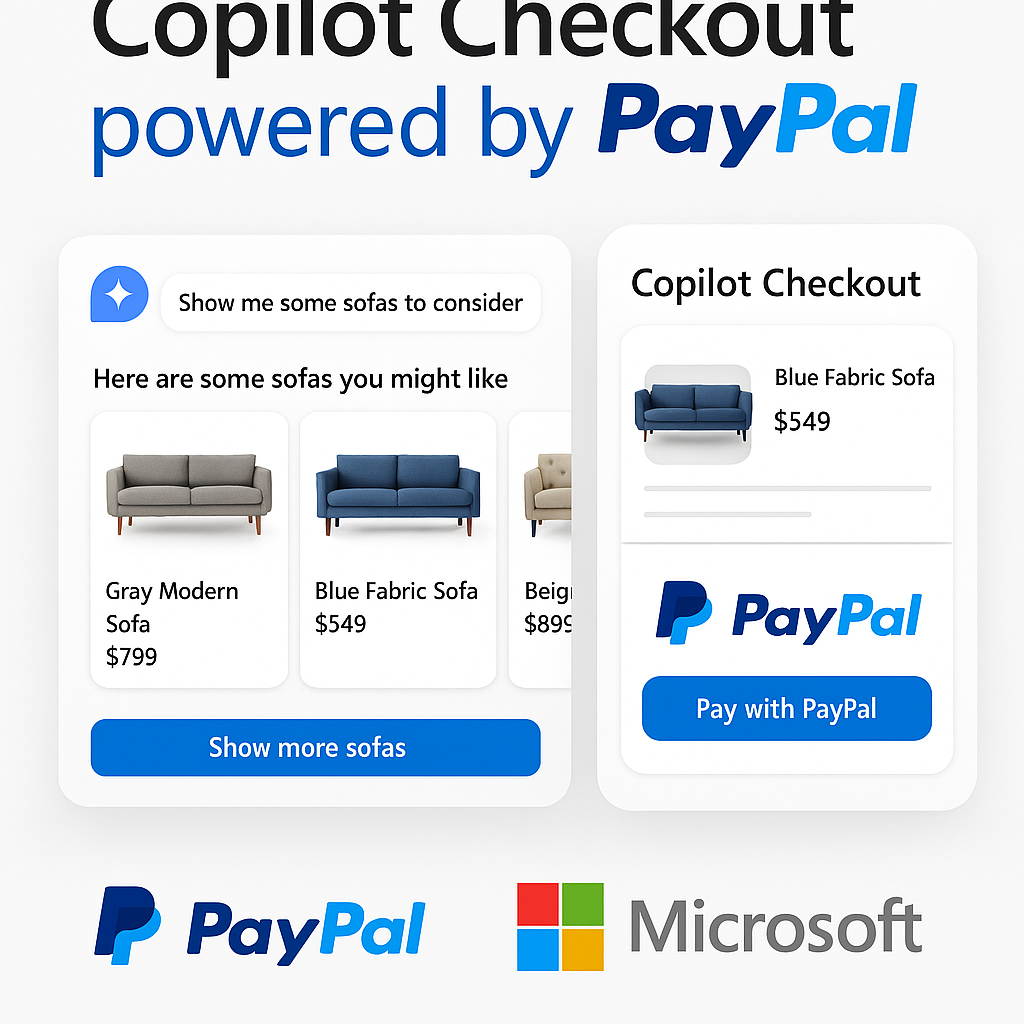
Microsoft and PayPal have officially joined forces to launch Copilot Checkout, a groundbreaking integration that redefines the online shopping experience. This collaboration merges Microsoft’s conversational AI capabilities with PayPal’s trusted payment infrastructure, creating a seamless journey from product discovery to purchase all within the Copilot interface on Windows, app and the Web.

It’s rolling out initially in the USA and works with partners including PayPal (and later), Shopify, Stripe, and Etsy.

Intelligent Discovery Meets Trusted Payments

Copilot Checkout will allows users to browse,  evaluate, and complete purchases (check out) directly from within Microsoft Copilot experience, eliminating the need to switch between different apps, devices or websites. By embedding PayPal’s agentic commerce services, the experience becomes not only faster but also more secure and flexible.

Key Features of Copilot Checkout

  • Conversational Shopping: Users interact with Copilot to explore products, compare options, and make informed decisions.
  • Integrated Payments: PayPal will power the end to end checkout flow, offering branded and guest checkout, credit card support, and even PayPal wallet integration.
  • Merchant Enablement: Retailers are able to surface and promote inventory, and reach high-intent customers at the moment of decision without loosing to the “buy later crew”

Benefits for PayPal sellers and consumers

For sellers:

  • Let’s them reach customers during high-intent moments
  • Reduce friction and cart abandonment and avoids the buy later mind set.
  • Expand visibility across Microsoft touch points such as Bing, Edge, and of course Copilot.

For Consumers:

  • Enables fast, flexible and in the moment checkout options (Amazon experience)
  • Stay within the Copilot experience from start to finish to ensure customers do not have to shift platforms, devices or apps.
  • Benefit from PayPal’s buyer protections and payment versatility.

Early Adoption and Ecosystem Impact

In this early stage of the partnership the early adopters include major brands including Etsy and Urban Outfitters.

What’s more Shopify merchants are auto-enrolled, while PayPal and Stripe sellers can opt in for this experience (Microsoft will need to convince them and sell the value).

This rollout marks a significant step in the evolution of agentic e-commerce, where AI agents act on behalf of users to simplify and accelerate transactions.

PayPal and Microsoft Partnership.

In the annoucement, Michelle Gill, GM of Small Business and Financial Services at PayPal, said:

“By integrating PayPal’s agentic commerce services with Copilot’s intelligent shopping platform, we are enabling seamless, reliable transactions for both merchants and consumers.”

Kathleen Mitford, CVP of Global Industry at Microsoft shared:

“Retailers can automate what slows them down and amplify what sets them apart.”

What and when?

Copilot Checkout will be come more than just a new hidden feature. Following OpenAI (and expect Google to follow), Microsoft and PayPal are looking to reshape consumer behaviour and drive more footfall to Copilot and PayPal. This is just the start and Microsoft plan to work with other e-commerce providers.

The joint goal is to redefine how brands connect with customers in real time, with intelligence and trust at the core from both PayPal and Microsoft.

For more insights, visit PayPal’s announcement or explore Microsoft’s commerce vision.